
How to Get Started with Real AI Adoption in Your Company

Key summary points:
Five ways founders and CEOs can get started with real AI adoption in their companies or organisations.
How to build AI capability through leadership and culture, not tokens and tools.
How the Scaling Up 4 Decisions provides a ready-made framework to systemically improve AI-adoption in your organisation.
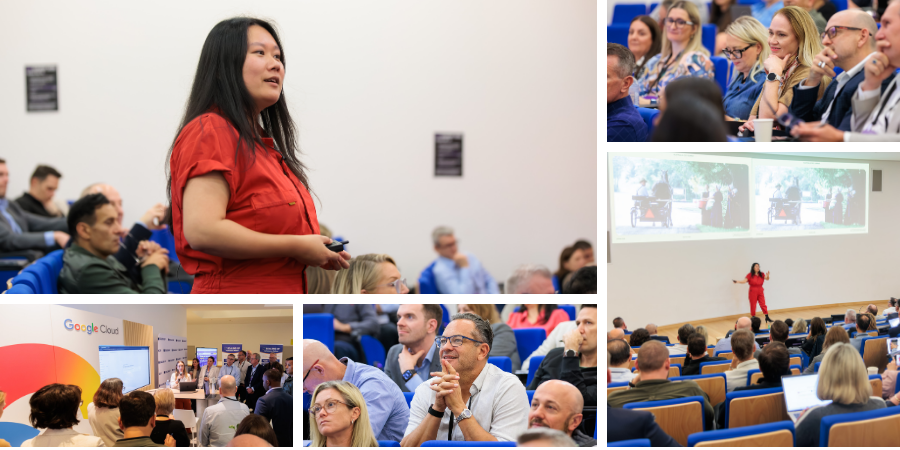
At CEO Summit 2026, I heard the same question repeatedly from founders, CEOs and leadership teams:
"Where do we start with real AI adoption?"
It's a reasonable question to what feels like an overwhelming challenge.
With every day bringing a better tool, new rules and predictions about the future and conversations with friends and peers making us feel further behind in the race to find new ways to deploy AI to make our work or life easier.
Yet after listening to Verne Harnish, Shuya Gong and Craig Scroggie, I came away with a different perspective.
The companies that succeed with AI won't necessarily have better technology. They'll have better leadership and learning agility.
So here are 5 ways to get started with a more structured approach to AI adoption in your organisation, beyond giving people access and hoping for the best. Thanks to early adopter clients and CEOs at CEO Summit who shared their use cases and wins with AI-adoption.
Understand Usage
Shuya Gong shared that AI-adoption is as much, if not more of, a people challenge as it is a data or tech one.
Before investing heavily in new infrastructure, understand how your people are currently using AI via a quick survey. Do they know how to use it effectively?
Ask questions:
How often is everyone using it and what for?
Who are the "power users" using it AI daily and experimenting with new use cases?
How are the leaders using it themselves?
Can people write effective prompts or autonomous agents that save them hours of work or help them create new strategic value for customers and the company?
Are they sharing their wins and use cases with each other?
What is their shadow AI or unofficial usage?
If we could solve one problem in your role or team today with AI - what would that be?
2. Upskill Everyone
The strongest message was that AI is less a technology transformation and more a people transformation.
The goal is not for one person to become the AI A-player.
The goal is for everyone to become AI capable - A-players + AI.
Once you have benchmarked and understood what everyone's level of usage and skill is, create a goal and plan to start upskilling every one.
Jon de la Motte from Compass Group who joined the CEO fireside chat at CEO Summit shared his plan to elevate every team member's AI skills to a Level 4 within a certain time period. Moving Level 1 to Level 2, Level 3 and those on Level 4 to Level 5 within a specified timeframe.
3. Build a Customer Intelligence Layer
Many companies are sitting on a goldmine of customer data without realising it.
Sales calls. Support tickets. Customer equiry emails. Feedback comments. NPS scores.
AI can now analyse thousands of customer interactions on the fly and identify patterns or issues that would normally take us humans at least a few days to analyse and report on, or potentially idetnifying trends we might miss.
As Shuya Gong, Harvard, challenged us: What is your unfair access to customers and data?
Start there.
4. Create a Culture of Experimentation
Start by asking every team player to do their own research and identify one way they think AI can help them to save time, improve their decision-making or create more value for customers every week.
Craig Scroggie, CEO of Next DC spoke about organisation structures becoming outdated from rapidly deploying agents and rethinking and designing workflows.
The lesson wasn't speed.
It was learning.
Set an achievable goal: focus on the output, not time or tokens.
For example: every employee finds ways to free up 5 hours a week using AI in the next 90 days. That's a lot of hours across the entire organisation!
Craig set the goal within his team - identify and build 40 value creation or time saving agents within 90 days.
Add just one question to your weekly leadership meeting:
What AI experiment did we run this week and what did we learn?
Start with Structured Data
The best place to start is internal-facing processes with structured data, according to Harvard's Shuya Gong.
Examples:
Sales calls or Meeting preparation and transcripts
Financial Reporting
Employee Scheduling
KPI analysis
Customer calls, feedback, tickets and service calls
CRM updates
Internal playbooks, process documentation
Internal subject matter experts knowledge search and onboarding for new staff
These are:
Low-risk
Easy to test
Easy to measure
Avoid starting with external-facing processes, relationships, ambiguous or unstructured data. Examples:
Strategic negotiations
Major customer decisions
Pricing decisions
Brand communications
Account relationship management
Get Real AI-Adoption Across All 4 Decisions
The Scaling Up 4 Decisions of People, Strategy, Execution and Cash provide a simple framework to get started with AI-adoption in a structured way.
For People:
Start by ensuring all team players have a level of access to AI-tools and are taught how to write effective prompts, using AI as a thought-partner.
Create a set of simple guidelines or code of conduct on one-page, that govern the use of AI-tools for company purposes, data and internal and external interactions.
Create psychological safety with AI-adoption, positioning it as the "How" and not the "Why" or "Who". Explain how AI can help to serve and live purpose and achieve long-term goals, not replace purpose or people.
Identify a group of internal "power users" to run experiments and set up a weekly call to share wins - attended by the CEO.
Develop an onboarding and coaching agent for new team players based on Wikis, FAQs, up to date People, Product , Process documents and internal experts.
Have your team review their job scorecards for the year 2032 with the lens of AI and Agent orchestration. How does the role acheive today's outcomes and goals. What's different and how do we work towards upskilling and role re-crafting?
For Strategy:
Create Customer intelligence dashboards that categorise and elevate decisions for each function and leadership team focussing on core customers. This way we get to see the top issues core customers are facing, (versus all customers).
Use call transcription to better understand your core customers' needs, most important Jobs to be Done, what holds them back. Understand messaging effectiveness to sales outcomes.
Create continuous Competitive monitoring and analysis such as Words Owned, Brand promises, guarantees and pricing updates made on competitive websites. Understand how you are positioned differently versus competition in the eyes of your customers and how you can make this more visible externally.
Analyse unit economics or Profit per X. Where we are making and loosing money with every X we sell or deploy? Using your CRM and Direct costs, work out your direct costs per X (customer, project, widget sold). Then ask AI to help you order from most profitable to least profitable and graph this to visibly identify those customers/ projects / widgets who are profit accretive and profit destructive each month.
For Execution:
Meeting cycles are "sped up" by AI adoption. We learned with mor ebeing acheived, that Quarterly meetings are now being crunched to 6-weeks or monthly. Re-access your priorities and meeting cadence along the way.
Rethink processes - don't just replace parts of them. Using Scaling Up's Process Accountability chart exercise to review the key 6-8 value creating processes in your company. First document and rethink the process. Rather than simply replace steps, aim to reithink and redeign workflows entirely with an Agentic lens.
Your internal data is key to unlocking unfair advantage to AI-implementation. For initial AI experiements, start with structured data. Clean and organise first. As opposed to projects relying on more ambiguous, unstructured data for initial AI projects.
For Cash:
Margin analysis on all Products and SKUs. Range reviews and rationalisations not bi-annually or quarterly but monthly. Discovering trending skus and categories quickly.
Pricing optimisation and recommendations - where is there opportunities to raise prices versus need to negotiate better direct costs.
Cashflow forecasting and working capital requirements - once a tendious task requiring financial staff to report monthly is now possible without an accounting degree.
Financial reporting and intelligence agent - assisting non-financial business leaders to query and identify opportuynities to acheive profit, improve cash and productivity goals by querying the financial statements in an easy conversational manner.
What's Next?
If you're ready to move beyond hope to scale with the 4 decisions and faster AI adoption and capability across your organisation, join us for:
Scaling Up Fundamentals with AI, Sydney, June 25, 2026
Scaling with AI (Advanced Series), Sydney, October 29, 2026


Comments